Local detail
Checking It Yourself
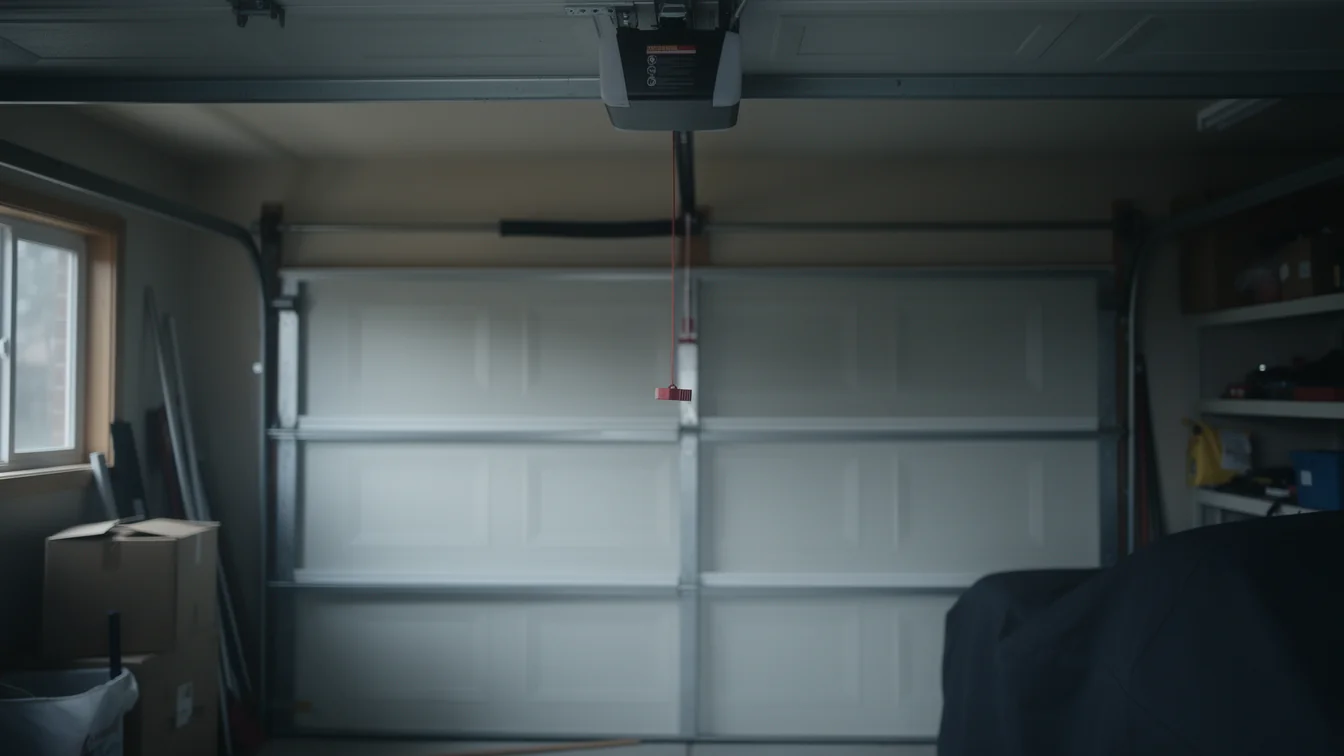
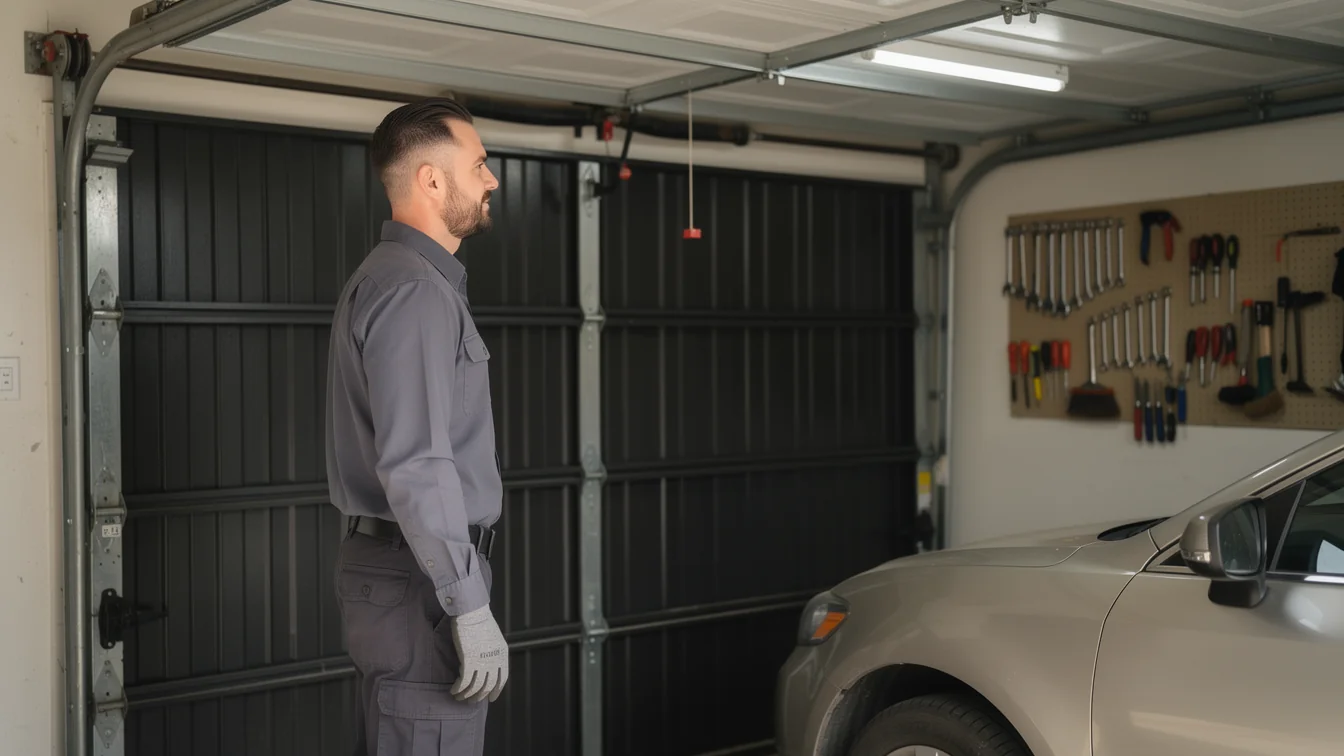
Before you call anyone, stand next to the door and run it through one full cycle with the garage light on. Most of the housing stock in Fort Collins went up between 1975 and 2012, with the heaviest building years clustering around 2005, so a lot of doors out there are original builder-grade units now pushing fifteen to twenty years old. That matters because the noise pattern tells you what's aging out.
A rhythmic metallic squeak on the way up is usually a dry roller - listen for it to repeat once per roller pass. A sharp bang partway through the cycle, especially near the top, is often the torsion spring shifting on the shaft, not breaking yet but working loose. A low grinding sound that doesn't change with speed points to the opener gear, not the door hardware at all.
Check the track brackets while you're at it. On doors from the 2000s building boom, the lag bolts holding the track to the jamb were often driven into framing that's had two decades to shrink and settle, and a loose bracket makes a distinct rattle every time the door passes it. Tighten what you can reach safely. Don't put your hand near a moving torsion spring or try to adjust its tension yourself - that's the one place where a DIY fix turns into an ER visit instead of a garage door repair.
The area
How Local Conditions Play In
Fort Collins sits in a cold-severe climate band, and that changes what a noise means depending on the season you hear it. Grease that's fine in July turns stiff in January, and a door that was silent all summer can start grinding the first hard cold snap simply because the lubricant on the rollers and hinges has thickened enough to resist the roller's spin.
The same cold also shrinks steel. A torsion spring coil that sat with a little slack in warm weather can tighten down on the shaft when temperatures drop, and that's when you hear a new tick or pop that wasn't there before. It's not usually a sign the spring is failing outright - more often it's the cold making an existing wear pattern audible for the first time.
We won't pretend every noise is weather. A door that's been quietly wearing out a roller all year will eventually make noise regardless of the thermometer. But if a noise shows up suddenly on the first cold morning of the season and nothing else has changed, cold-stiffened lubricant on original hardware is the first thing worth ruling out before you assume something broke.
What we find
The Problem
Here's the part that doesn't get said enough: in a service area where the bulk of homes were built between 1975 and 2012, and the 2000s stock across the ten areas in this region is especially common, a huge number of garage doors are still running their original torsion springs and original steel rollers. Builder-grade springs are rated for a set number of cycles, and a door used twice a day for fifteen-plus years has usually put more wear on that spring than most people realize.
Across the roughly 27,939 owner-occupied houses in this service area, a good share still run the steel rollers that were standard builder-grade hardware in 2000s construction, and steel-on-steel is about the loudest roller setup there is - no amount of lubrication fully quiets it, because the noise comes from the roller shape, not just dryness.
So when a noise shows up on a door this age, the honest read is often: this isn't a lubrication problem, it's an end-of-service-life problem. We'll tell you straight when a $20 can of lubricant will fix it and when it won't. A spring that's shifted on the shaft or a roller that's worn oval doesn't get quieter - it gets replaced.
How we work
The Seasonal Bit
With a cold-severe winter climate, Fort Collins gets a real seasonal pattern in service calls, and noise complaints cluster hard right after the first sustained cold stretch of the year. That's when stiff lubricant, a slightly loose bracket, and a spring that's been one bad winter away from done all show up at once.
Out toward areas like Old Town West and Bellvue, where the same 2000s-era doors are common, homeowners tend to notice the exact same thing: a door that ran fine all through a mild fall suddenly bangs or grinds the week it drops below freezing. It's not a coincidence and it's not bad luck - it's original hardware meeting its first real cold test in a while.
The seasonal fix isn't always a repair. Sometimes it's re-lubricating with a grease rated for low temperatures instead of a general-purpose spray that thickens too much in the cold. But if the noise is coming from a spring that's visibly stretched or a roller with a flat spot worn into it, no lubricant - summer or winter - is going to make that sound go away for good.
Talk to a local pro
Garage door trouble in Fort Collins?
Same-day service with honest, upfront quotes.