Local detail
Checking It Yourself
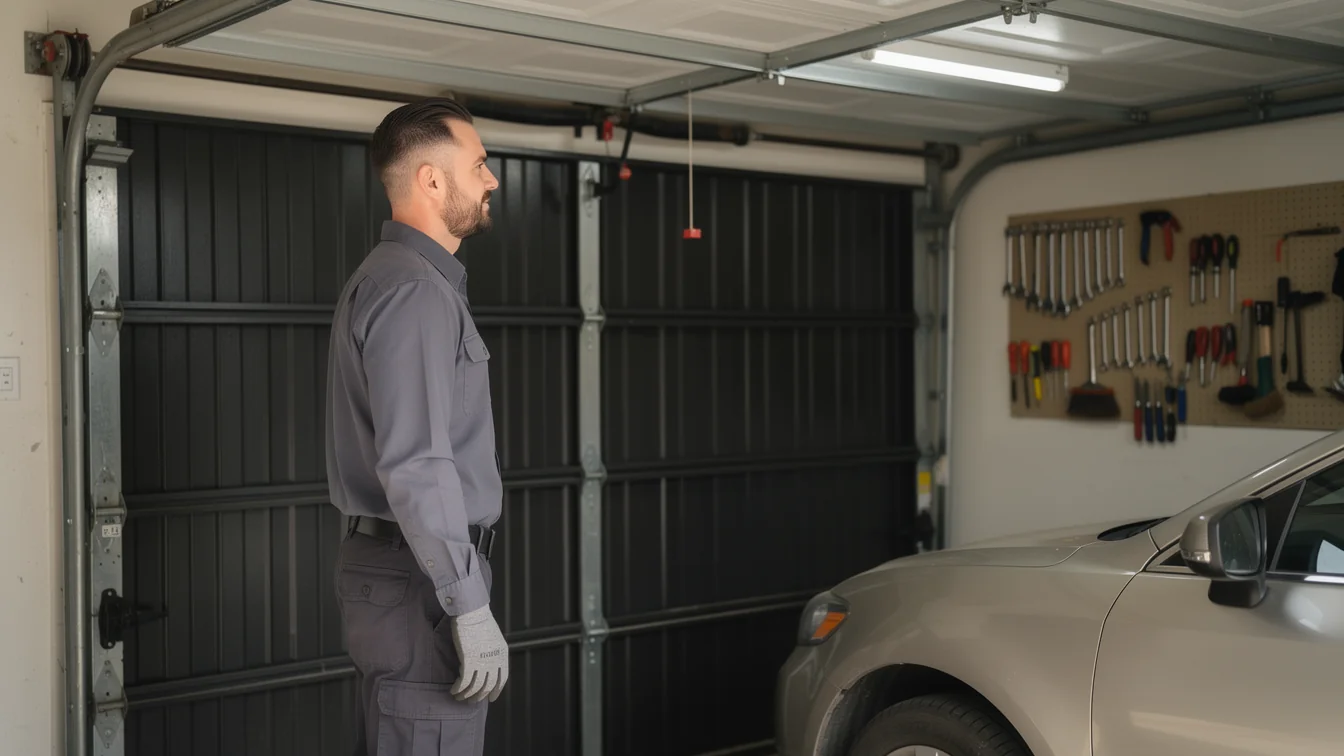
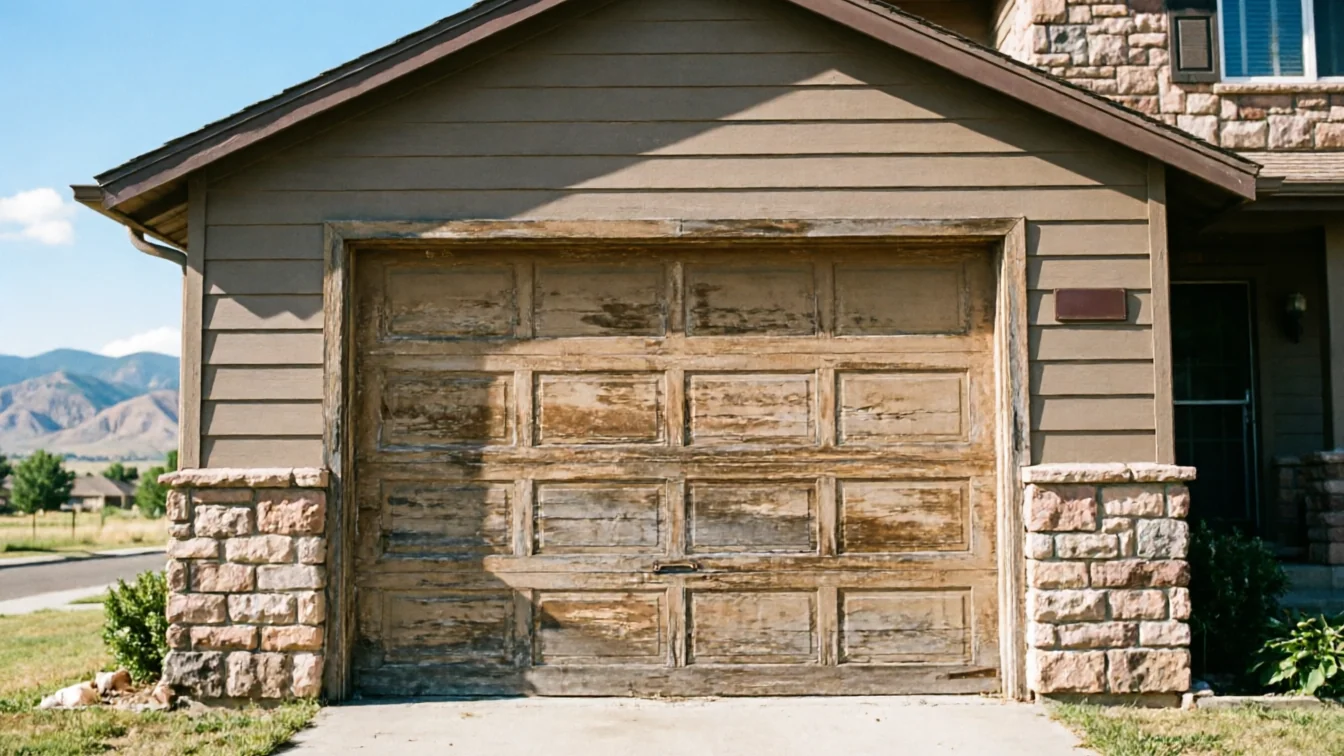
Before you call anyone, open the door by hand with the opener disconnected. If it's hard to lift or won't stay halfway up, the springs are losing tension - that's wear, not damage, and it's fixable on almost any door. Look at the tracks for dents or spots where the rollers jump rather than roll. Check the bottom panel for rust or flaking where it meets the slab, especially on doors without a raised threshold.
Because most houses across this area went up between 1975 and 2012, with the median build year around 2005, you're very likely looking at a door that's somewhere between 13 and 50 years old, with the bulk of the stock clustered in the 2000s. That's a different animal than the uninsulated steel doors from the 1960s you'd find in an older river town. A 2000s-era door usually has a steel skin over polystyrene or polyurethane fill, a galvanized torsion spring, and nylon rollers on steel track - parts that are still in production and still stocked. If yours matches that description, repair is almost always the right call over replacement.
Write down what you find. A cracked panel on one side, a spring that's visibly stretched, a track that's bent rather than just misaligned - that list tells you whether you're fixing a part or buying a door.
The area
How Local Conditions Play In
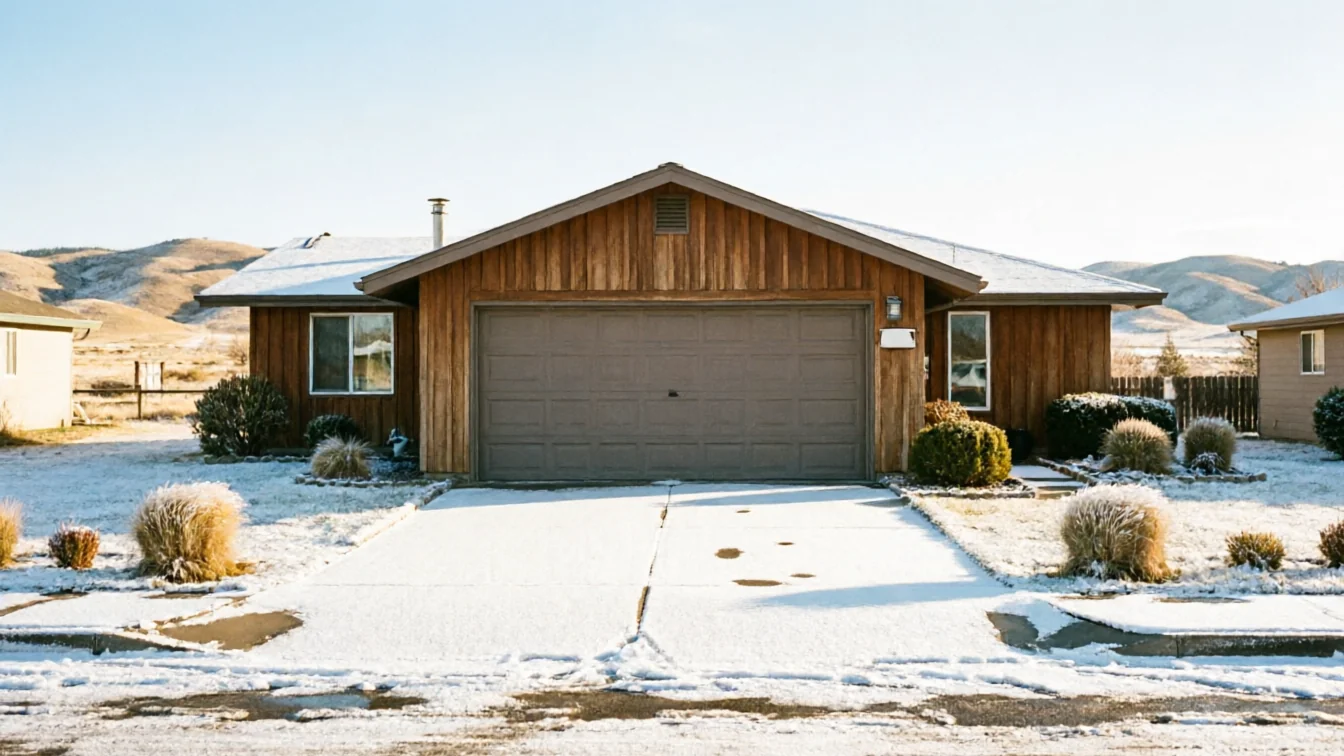
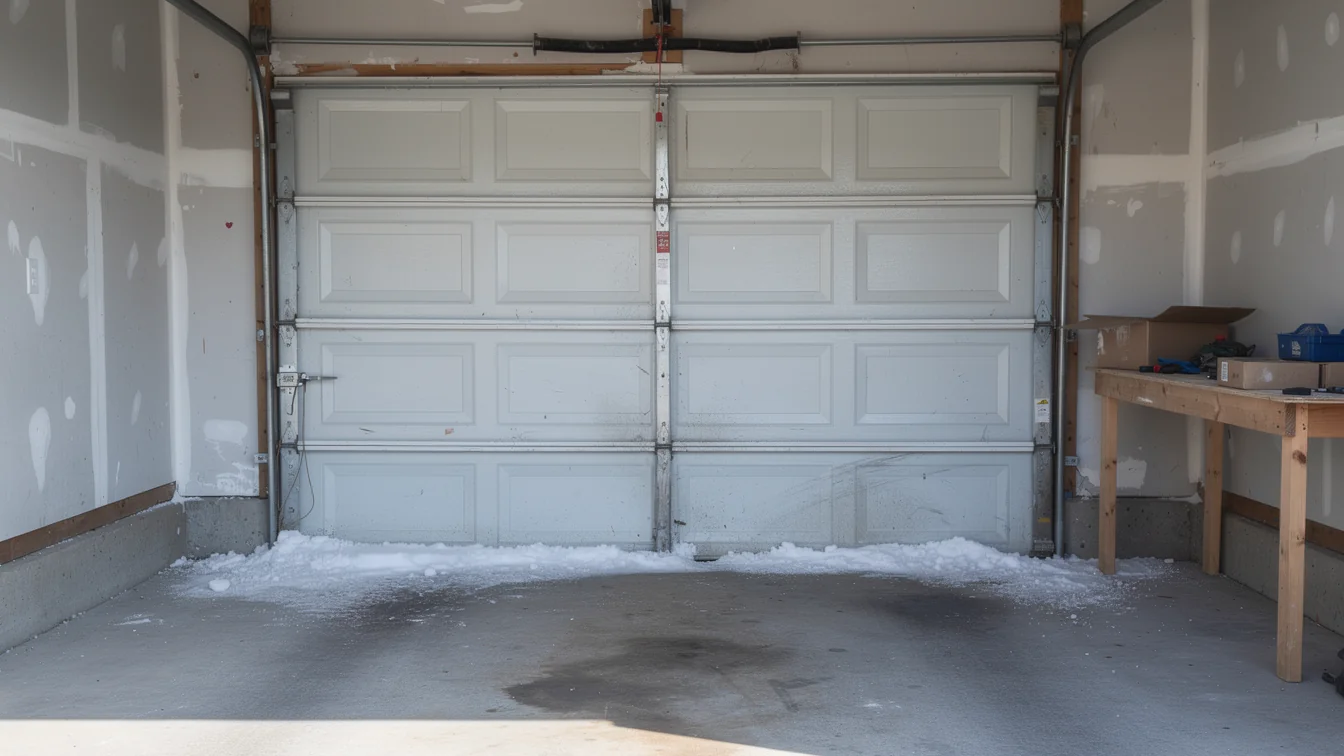
This area sits in a cold-climate band with severe winter conditions, and that matters more for door hardware than most people expect. Steel contracts in deep cold, which tightens tolerances on tracks and rollers that were set up loose in a 70-degree garage during a summer install. A door that rolled fine in July can bind or jump the track in January without anything actually breaking - it's just the metal responding to the temperature swing.
Torsion springs also fatigue faster under repeated cold-to-warm cycling than they would in a mild coastal climate. If your door was installed during the 2000s building push that accounts for most of the housing stock here, the spring is original and has likely been through two decades of that cycling. That's consistent with spring failure being one of the most common calls on doors from that era - not a sign the door itself is bad, just a part at the end of its service life.
Insulation matters too. A door built to 2000s-era energy standards usually has enough fill to keep the garage from becoming a heat sink in a severe winter, which is one more reason replacing the whole door over a worn spring or a bent track is often not worth it here.
What we find
The Problem
The actual failure point on most of these doors isn't the door - it's one of three parts: the torsion spring, the cable, or the bottom roller bracket. All three are serviceable on a standard 2000s steel door without touching the panels themselves. If the springs are original to a build from that era, replacing a matched pair while you're already in there costs less than a second call six months later when the other one goes.
Where it stops being worth fixing: if the bottom panel is rusted through from standing water, if the door is a non-standard size that nobody stocks parts for anymore, or if multiple panels are cracked from an impact, you're better off pricing a new door. We'll say so plainly if that's what we find - there's no upside in patching a door that's going to need the same call again in a year.
One honest limit: we don't carry every obsolete panel profile. If your door is an odd size or an older style that's been discontinued, a replacement panel can take longer to source than the repair itself, and sometimes a full door swap is actually the faster fix.
How we work
The Seasonal Bit
The worst time to find out your spring is weak is during a cold snap, when the extra tension needed to lift a door against stiff, contracted hardware is exactly what pushes a tired spring past its limit. If you noticed the door getting heavier to lift by hand toward the end of last winter, that's not something that fixes itself with warmer weather - it just gets quieter until next winter brings it back.
Fall is the better time to deal with it. Catching a stretched spring or a dragging roller before the severe part of the season means you're not waiting on a repair with a car stuck inside during a cold stretch. It also means the job is a planned repair instead of an emergency one, which tends to be the cheaper version of the same call.
If your door matches the 2000s-era stock common across this area, routine seasonal attention - lubricating rollers and hinges, checking cable tension - usually keeps it running another decade past where people assume it's done. The door isn't the weak link most of the time. The hardware is, and that's the part worth maintaining.
Talk to a local pro
Garage door trouble in Fort Collins?
Same-day service with honest, upfront quotes.