Local detail
Checking It Yourself
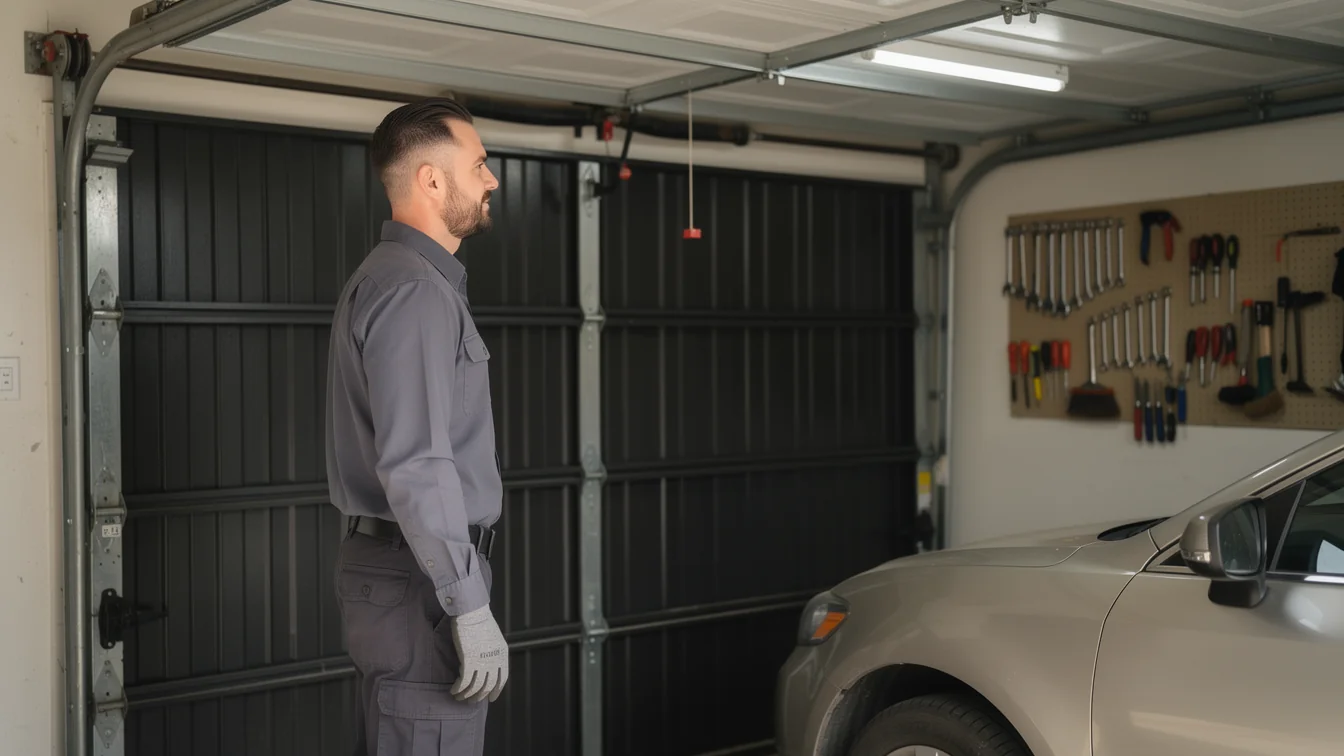
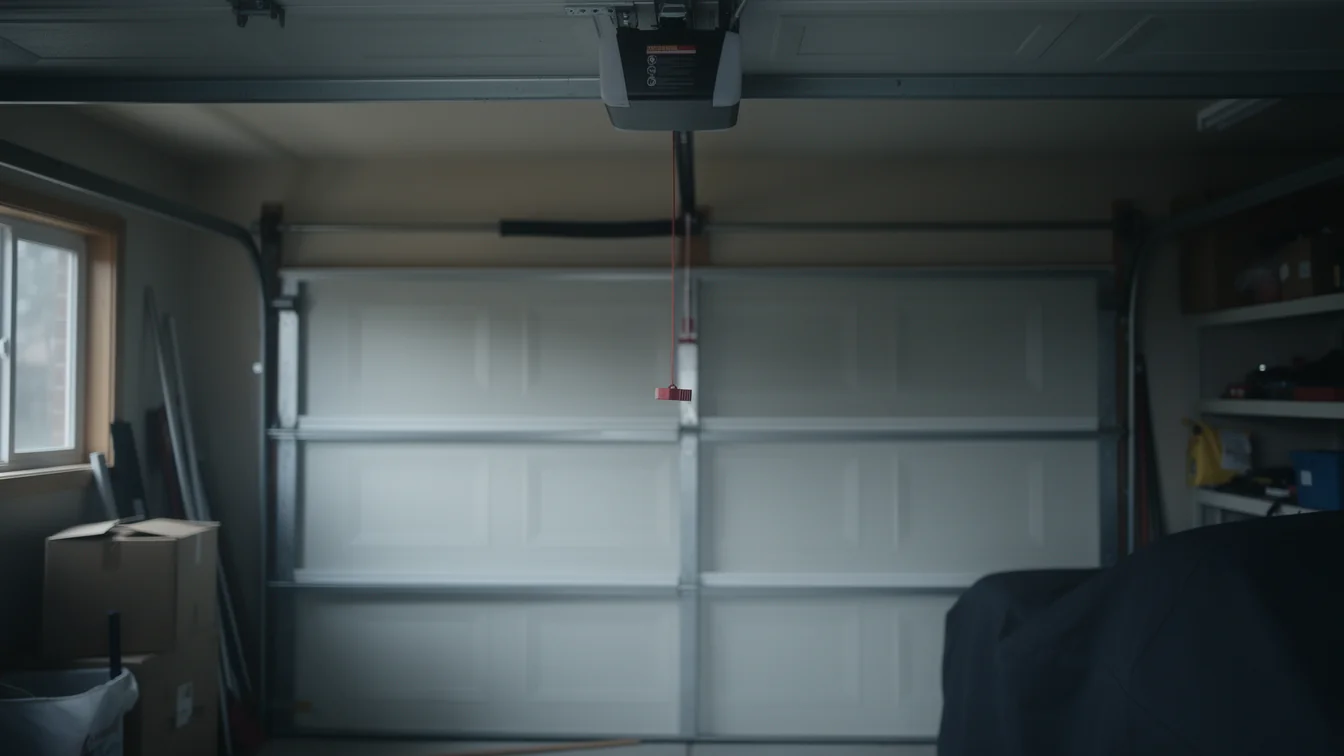
Before you call anyone, there's a few things worth looking at. Most houses in this service area went up between 1975 and 2012, with the bulk of that stock dating to the 2000s build boom, so the hardware on your door is probably original-to-the-house torsion springs and a belt or chain opener from that same era - not the ancient stuff you'd find in an older town. Pull the emergency release cord and see if the door moves smoothly by hand, with the opener disconnected. If it's hard to lift or drops on its own, that's spring tension, not the opener. Look at the two tracks for daylight gaps where rollers ride - uneven gaps usually mean the door's gone out of square. Check the bottom weatherseal too; on a door that age it's often still the factory strip and starting to crack. None of this tells you exactly what's wrong, but it tells you whether you're looking at a spring job, a track job, or an opener problem, which changes what we bring on the truck.The one thing we won't talk you through over the phone is spring replacement - torsion springs store enough force to break bones, and that's a truck visit, not a DIY afternoon.
The area
How Local Conditions Play In
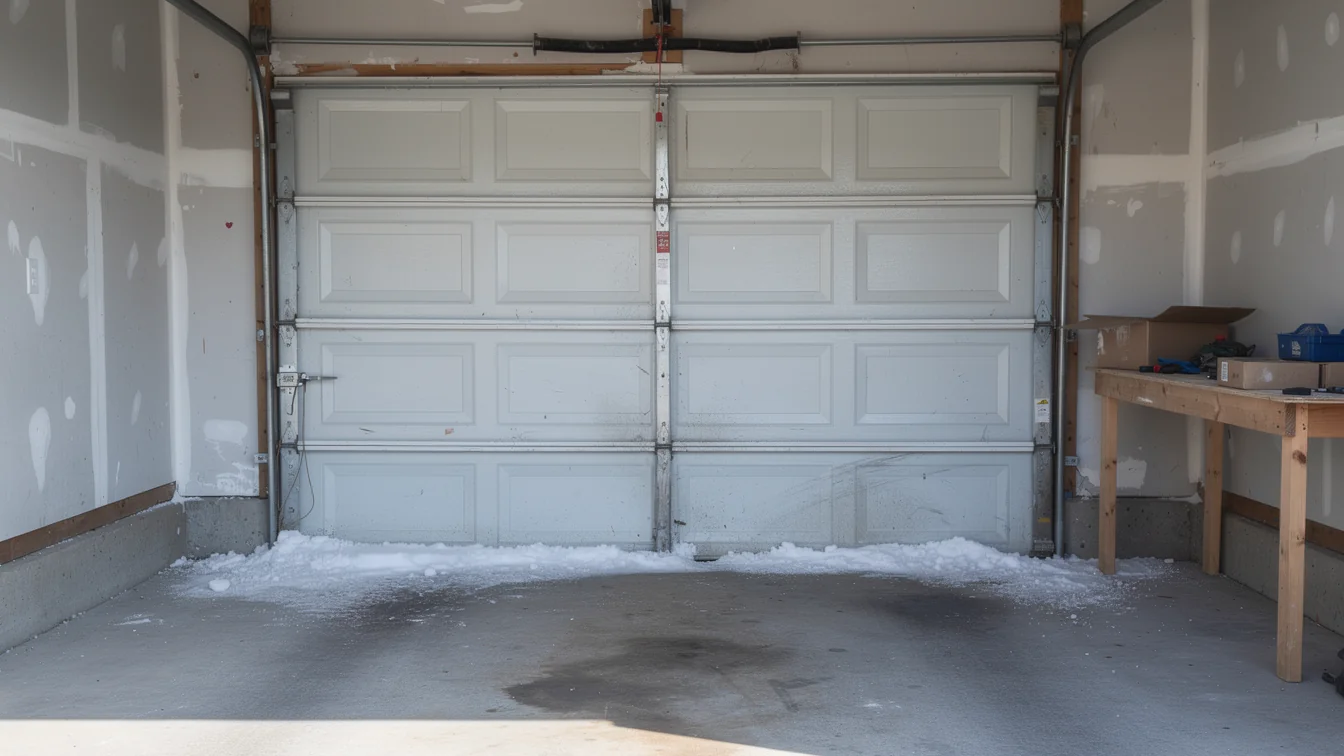
Fort Collins sits in a severe cold climate band, and that matters more for garage doors than people expect. Steel panels and galvanized torsion springs both contract in hard cold, which tightens tolerances in the track and stiffens spring steel right when the opener is asking the most of it. On a house built in the 2000s across these neighborhoods, insulation and seal quality were decent for the era, but factory weatherstripping is rated for maybe a decade of UV and temperature swing before it hardens and stops sealing. We see a lot of calls where the actual complaint is noise or a door that looks like it's binding, and the root cause is just cold-stiffened grease in the rollers or a spring that's lost a half-turn of tension from age, not damage. None of that shows up as an emergency until a cold snap pushes it over the edge.
What we find
The Problem
The core issue with housing from this build window - 1975 through 2012, median around 2005 - is that a lot of original hardware is now 15 to 20-plus years old and was never top-tier to begin with. Builders during that stretch spec'd openers and springs to a budget, not to a 20-year service life. So what shows up as a service call is rarely one clean failure. It's usually two or three things stacking up at once: a spring at the end of its cycle life, rollers that were never upgraded from the plastic originals, and a sensor alignment that's drifted a few degrees over the years. We open the call by checking all three, because fixing just the symptom that got reported - say, replacing one sensor - often means the same homeowner calls back in three months for the spring. A full service call means we're pricing the actual cause, not the easiest fix.
How we work
The Seasonal Bit
Spring tension and lubricant viscosity both shift with Fort Collins winters, which is why the same door can feel fine in July and heavy in January. We check spring balance on every call regardless of what was reported, because a door that's 10-15 pounds off balance works the opener gears harder in cold weather and that's when gear sets strip. If your house falls in one of the areas built mostly in the 2000s, the opener is likely original and nearing the point where the drive gear - plastic in most residential units - is the first thing to go after years of cold-weather strain. We don't replace openers preventively; if it's running fine, we service it and move on. Replacement only gets recommended when the gear or capacitor has actually failed, not on a schedule.
Talk to a local pro
Garage door trouble in Fort Collins?
Same-day service with honest, upfront quotes.