The Symptom
The opener groans, stalls halfway up, or reverses the door for no reason you can see. Sometimes the remote stops working but the wall button still fires.
Intermittent cold-morning grinding
Sometimes it runs fine for a week, then starts grinding on cold mornings. None of these are random. Across this service area, housing went up mostly between 1975 and 2012, with the heaviest concentration dating to the 2000s.
Openers aged with house
That means a large share of openers out there were installed alongside the house itself, during that same build window, which puts a lot of units at the same age right now. Gears made of nylon wear down after years of cycling. Circuit boards age out. Chain tensioners stretch and start slapping the rail.
Unit at end of life
If your opener is original to a 2000s-era build, the symptoms you're seeing aren't a one-off glitch - they're the unit reaching the end of what it was built to do. We don't recommend throwing parts at a unit that's simply worn out. Past a certain point, patching an old opener costs more in callbacks than a clean install costs up front.
Why This Fails Locally
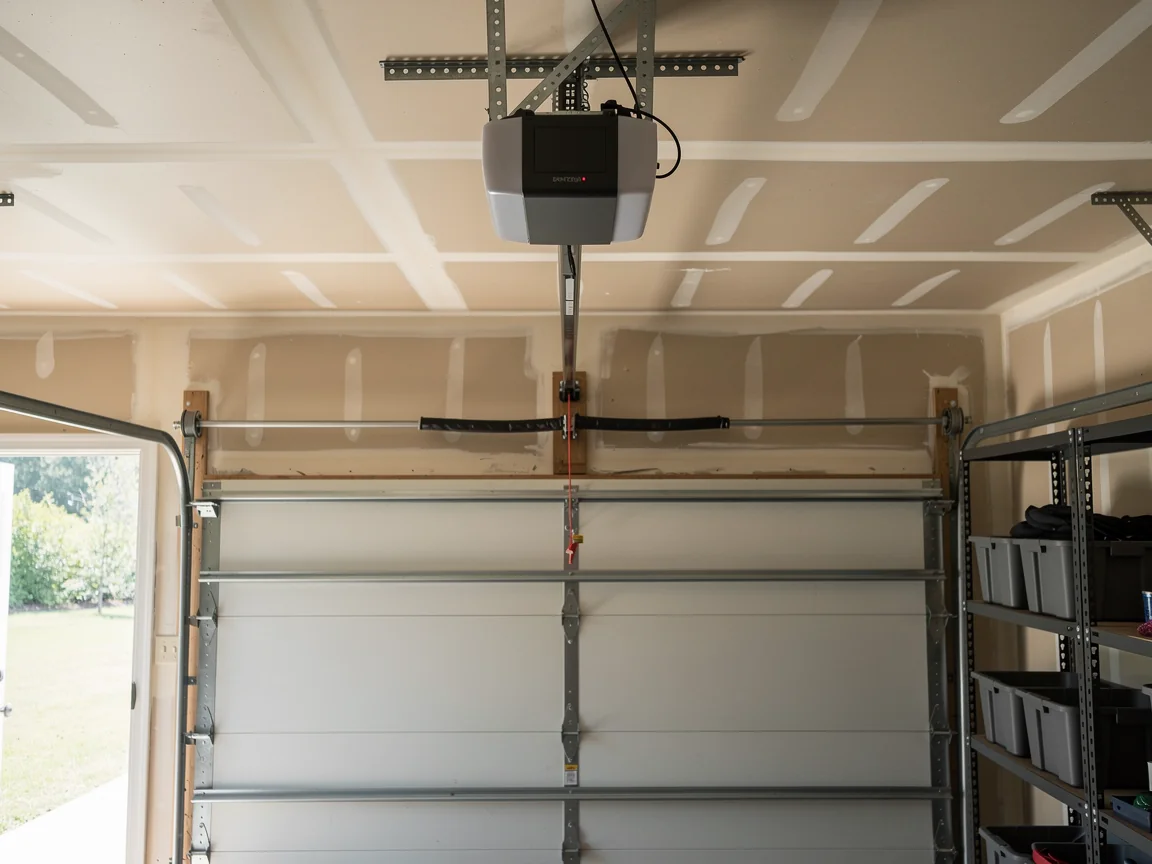
This area sits in a cold-severe climate band, and that matters more for openers than most people expect. Garages here aren't heated, so the opener's motor, gears, and lubricant all go through repeated freeze-thaw cycles every winter. Grease that's fine at 60 degrees turns stiff at 10, and a motor working against stiff grease pulls harder on every part downstream - the gear, the chain, the drive screw. Add in the age of the housing stock, built mostly in the 2000s, and you get openers that were spec'd for a lighter duty cycle than they're now getting after fifteen-plus years of cold-weather strain. With a median household income of $105,017 across 27,939 owner-occupied houses in this service area, most owners we talk to would rather install a unit built for the cold than keep nursing along a chain-drive opener that was never rated for it. That's a maintenance decision as much as a comfort one - a door that won't open in a cold snap is a real problem, not an inconvenience.
Parts We Carry
We carry belt-drive and chain-drive openers in the horsepower ranges that fit typical 2000s-era single and double doors, along with battery backup units for when a winter storm takes the power out mid-cycle.
Accessories kept on truck
We stock standard safety-sensor pairs, replacement drive gears for units still worth saving, and wall consoles with lock-out features for garages that double as workshops. What we don't stock is every proprietary remote or smart-home bridge on the market - some of those are special order, and we'll tell you upfront if your preferred setup needs a part we have to bring in rather than one on the truck.
Same-day opener swaps
For most replacements in houses from this era, the openers we carry on the truck cover the job the same day, which matters when the old unit's died and the door's stuck shut.
What the Fix Involves
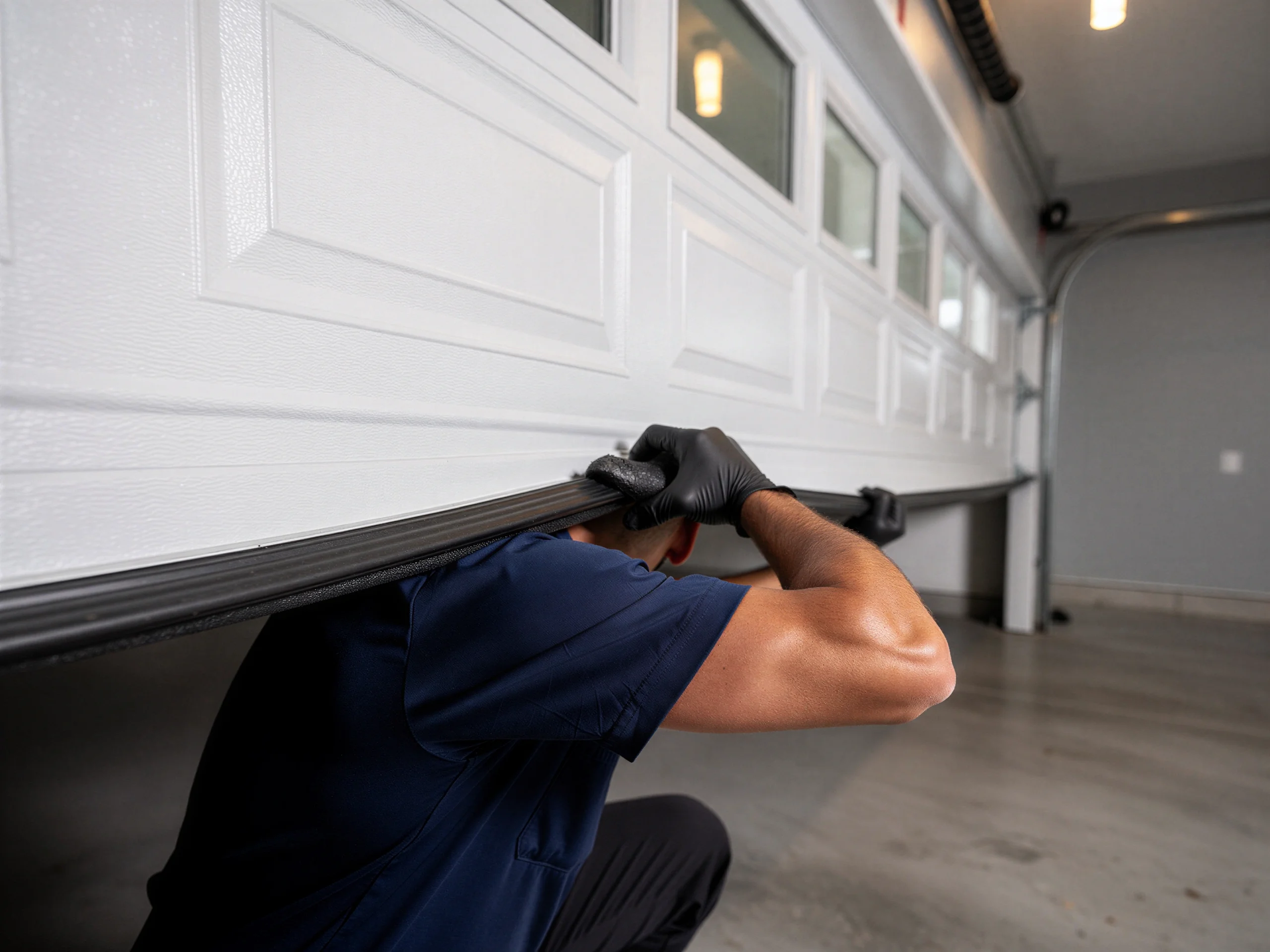
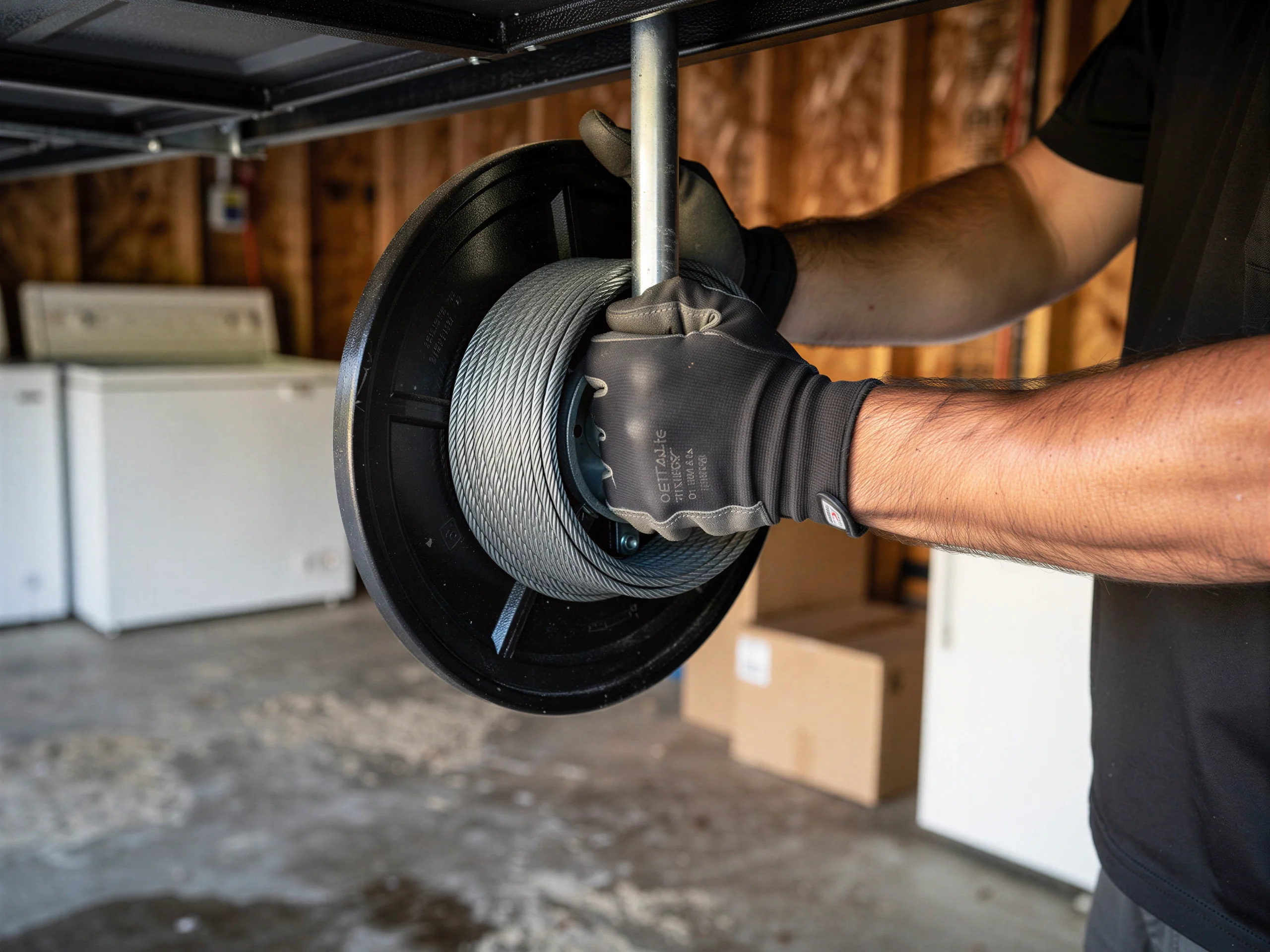
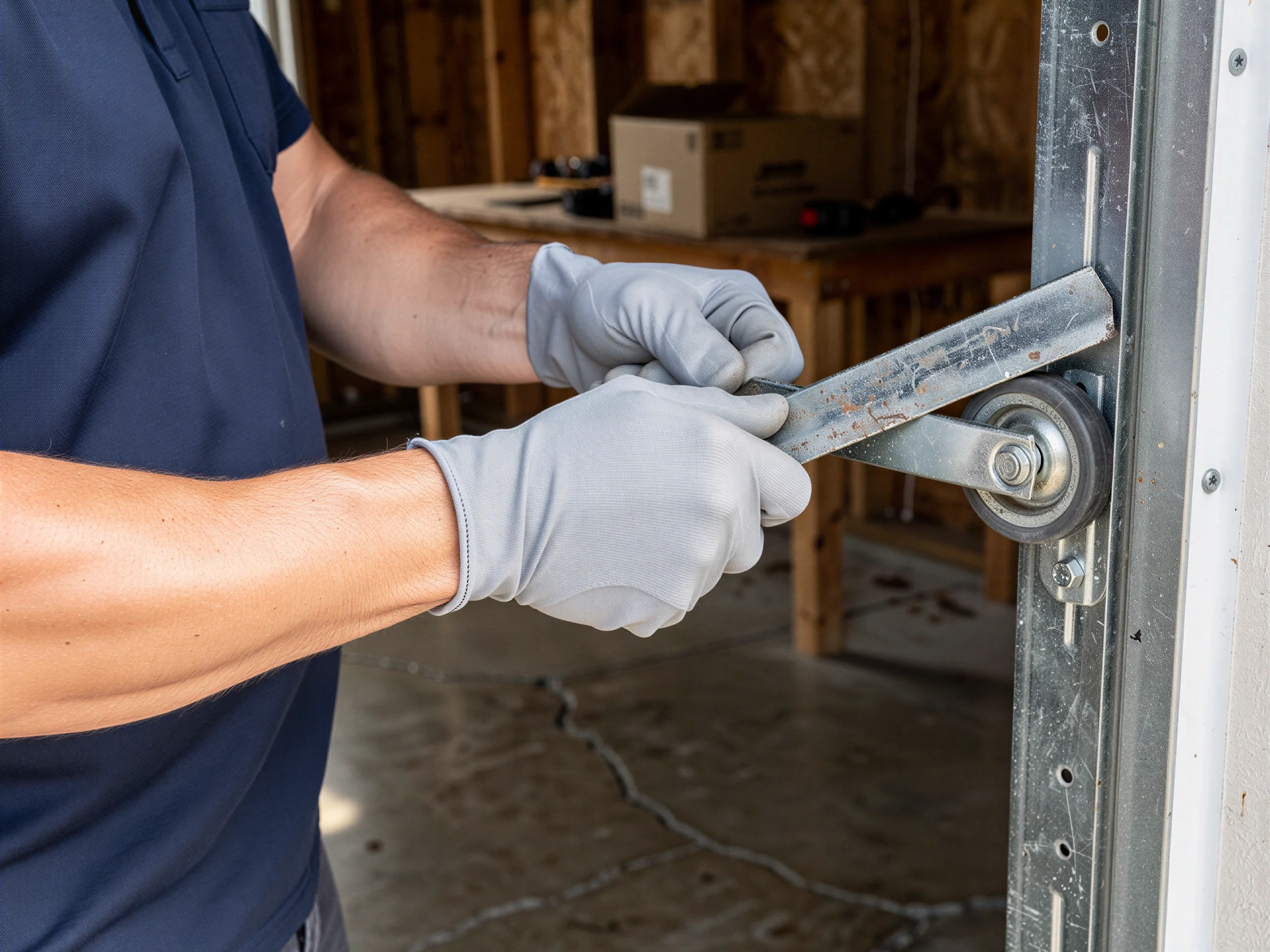
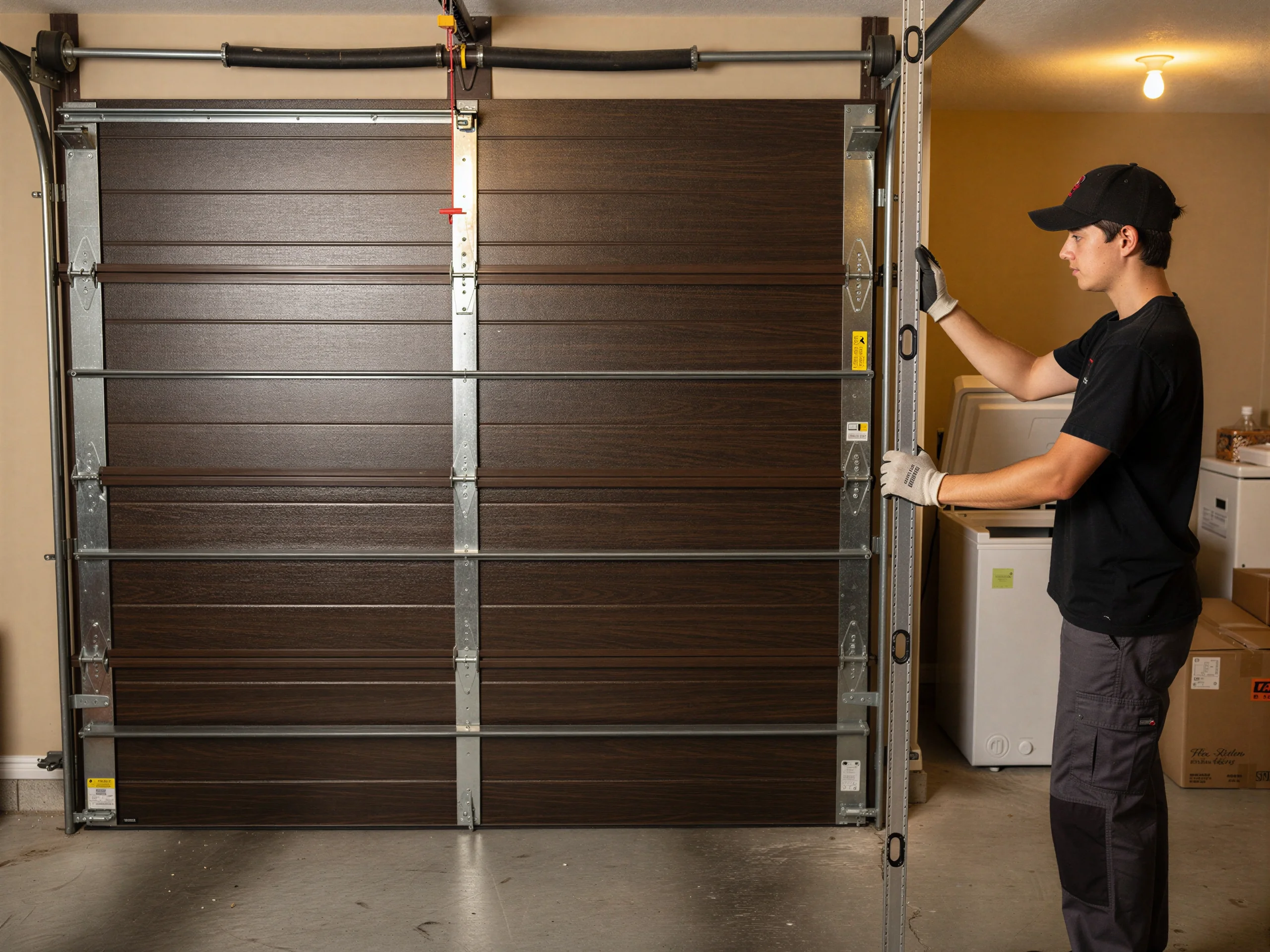
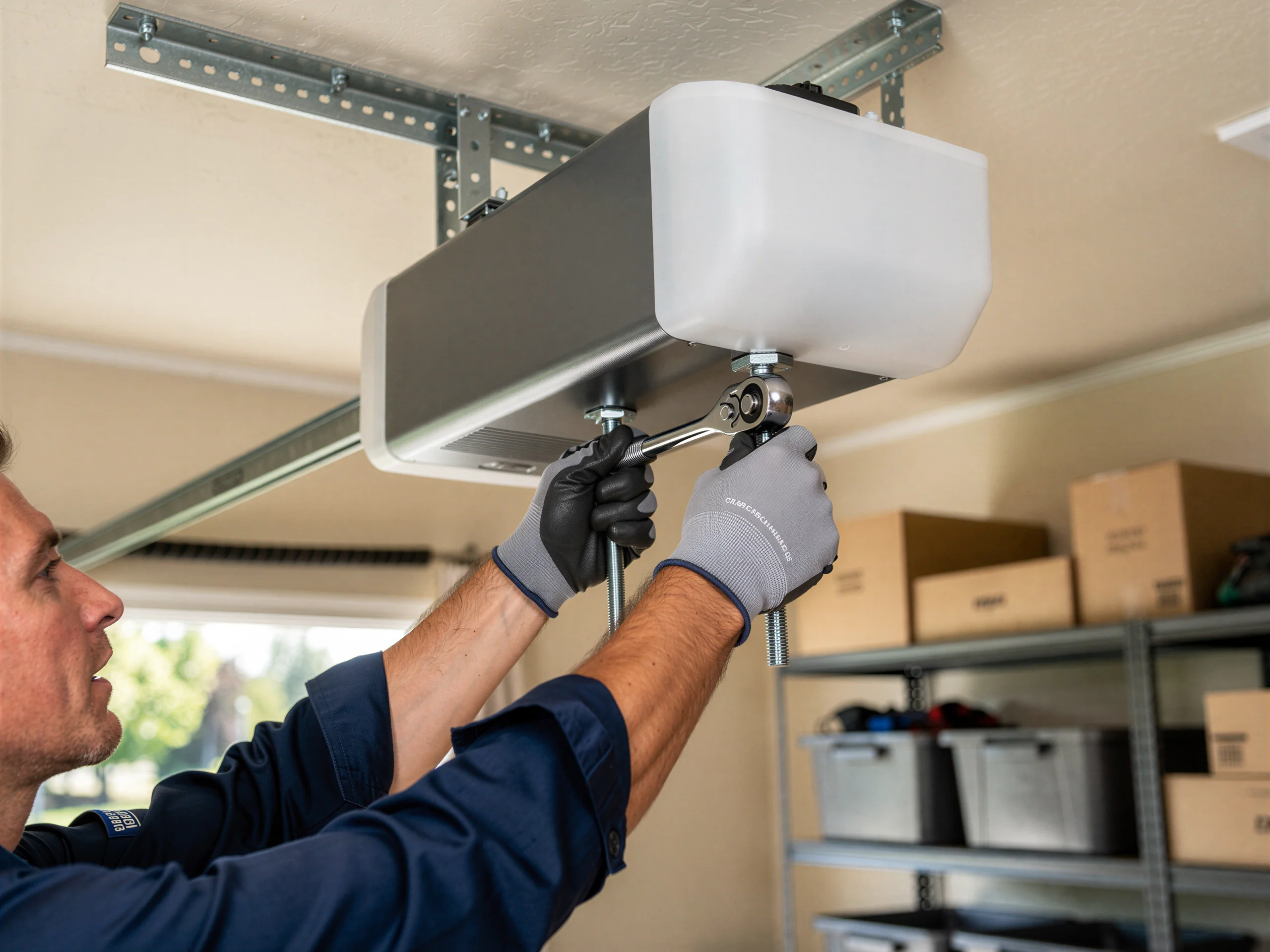
We start by checking whether the problem is actually the opener or something upstream of it - a spring losing tension or a track out of alignment can mimic opener failure, and replacing the opener won't fix either. Once we confirm the opener's the issue, we pull the old unit, check the header bracket and rail mount for wear (common on houses from the 2000s where the original hardware is now past its rated life), and set the new opener to the door's actual weight and travel rather than a generic default. Safety sensors get realigned and tested, not just reused from the old mount. Given the climate here, we also check that the unit's lubrication and electronics are rated for the swings this area sees rather than just the manufacturer's generic range. Last step is cycling the door a dozen times under load, cold or not, so the reversal and force settings hold before we leave.
Talk to a local pro
Garage door service in Fort Collins?
Same-day service with honest, upfront quotes.